When you’re running an outdoor LED video wall business, one question comes up more than any other from our clients—both those just testing the waters with their first wall and those upgrading a project that’s already under construction: why isn’t my video wall performing as well as it should? I’ve been in this space for 7 years, and I’ve seen it all: event organizers frustrated by washed-out footage mid-concert, retail owners complaining about dim displays that get lost in streetlight, and sports venue managers dealing with lag that makes replays look unprofessional. The good news is that optimizing outdoor LED video wall performance isn’t just about picking the brightest panels or the priciest tech. It’s about a mix of intentional selection, careful installation, regular upkeep, and even small adjustments to how you operate the wall day to day. Let’s break this down, straight from someone who’s walked every jobsite, troubleshooted every glitch, and talked to hundreds of clients about what actually works outdoors. Outdoor LED Video Wall
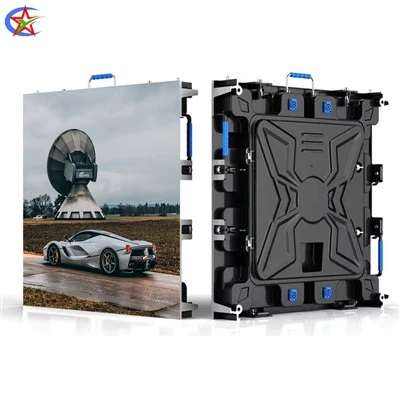
First, and this is the foundation that almost every missed guide overlooks, you can’t optimize a wall if you start with the wrong panels. I’ve had a client come to me last year who bought a cheap off-the-shelf wall for a 6-month outdoor festival series, and within 2 weeks, half the panels were fading in direct sunlight. The problem? They picked panels rated for “indoor/outdoor” use that only hit 1,500 nits of brightness. Outdoors, especially in full midday sun, you need a minimum of 2,500 nits for shaded areas, and 3,500 to 5,000 nits if the wall faces unobstructed sun between 10 a.m. and 4 p.m. I tell every client this: nits aren’t a marketing buzzword—they’re how we measure brightness, and outdoors, low nits equal invisible video. But here’s the catch: you don’t need to overbuy brightness for no reason. If you’re installing a wall for a nighttime park concert, where the ambient light drops to almost zero after 8 p.m., maxing out at 5,000 nits wastes power and shortens the panel’s lifespan. The sweet spot is matching brightness to the exact ambient light of your location. For example, a wall at a highway rest stop that’s lit by streetlights will do fine with 2,800 nits, while a beach installation facing the open ocean, where there’s no shade all day, needs at least 4,000 nits.
Next, pixel pitch is another common mistake that kills performance, and it’s not just about resolution. I worked with a small town last year that put up a 16mm pixel pitch wall for their high school football stadium. The problem? When you’re sitting in the back stands, 200 feet from the wall, the pixels were so big that the footage looked pixelated, like a blurry grid from far away. They ended up having to replace a portion of the wall to 8mm pitch, and it doubled how many people said they could read the stats and see replay details clearly. The rule of thumb I teach is: pixel pitch should be smaller than 1/100th of the viewing distance. So if your farthest viewer is 100 feet away (1,200 inches), your pixel pitch should be less than 12 inches? Wait no, let’s do the math right: pixel pitch in millimeters, convert to inches, divide the viewing distance in inches by pixel pitch to get the minimum distance between pixels where the human eye can’t distinguish them. For 100 feet (1,200 inches), 1200 / 10 = 120, so a 10mm pixel pitch works great for that distance. But if your farthest viewer is 50 feet (600 inches), you can go up to 15mm, no problem. Pick a pixel pitch too small, and you’re paying for more pixels you’ll never see, wasting money and even making the video harder to play because your video processor has to push more data. Too big, and the wall looks grainy—no amount of brightness fixes that. That’s the balance we walk with every client: matching pixel pitch to their exact layout, not just what’s trending.
Now, installation is where a lot of good panels go bad. I’ve seen walls that look amazing when first set up, but 6 months later, one side is dimmer, or there’s a gap between panels that looks like a black line across the screen. The big culprit here is heat. Outdoor LED panels generate a lot of heat, and if they don’t have proper ventilation, their performance drops fast. I remember a client who installed their wall in a closed metal frame, no gaps, in Arizona. By mid-June, the panels on the bottom row were running 15 degrees hotter than the top, so their brightness dropped by 30%, and some pixels started to die. The fix? We swapped the closed frame for an aluminum open-air frame, added passive venting slots on the sides, and even installed small, low-noise fans for extra airflow on the hottest days. That little adjustment brought their temperature down 10 degrees, and their brightness stayed consistent all summer. Another installation mistake: panel alignment. Even a 0.5mm gap between two panels can create a dark line that’s noticeable from 50 feet away. We use laser alignment tools on every jobsite now, not just a tape measure, to make sure each panel is perfectly level and spaced evenly. For temporary walls, like for a tour or a festival, we use quick-locking brackets that keep alignment tight even when the wall is moved and set up again.
Then there’s the control system, which is the brain of the video wall, and it’s often the most overlooked part of performance. A few months ago, an event company called us in panic because their new wall was lagging—when a video played, it was 2 seconds behind the sound, and replays were jittery. They had bought cheap control software that couldn’t handle the 4K feed they were sending it. We upgraded them to a professional, outdoor-rated control system that’s built for high-resolution video, with built-in sync tools and adaptive brightness. Wait, adaptive brightness is a game-changer here. Most people think brightness is just a fixed number, but adaptive brightness sensors that are calibrated for outdoor light can adjust the wall’s brightness in real time. On a cloudy day, it dims the wall to 1,500 nits to save power, and when the sun breaks through, it jumps to 4,000 nits automatically. No more having to manually adjust the wall at 2 p.m. when the sun is highest, and no more washed-out footage when you forget to check. The control system also lets you run diagnostics remotely, so if a panel goes bad, you get an alert immediately, instead of waiting for someone to stand in the sun and check every panel one by one. That’s a huge time-saver for big walls, like the ones at concert venues or sports parks.
Weatherproofing is non-negotiable for outdoor walls, and it’s not just about keeping water out. I’ve seen panels water-damaged by heavy rain, by morning dew that seeped in through gaps, even by snowmelt getting trapped in the frame. When we quote a wall, we use IP65-rated panels at minimum—IP65 means they’re protected against low-pressure water jets from any direction, which is enough for heavy rain, snow, and dew. But we also add a silicone sealant around every panel edge, and we make sure the frame has a sloped design, so any water that hits the wall runs off instead of pooling on top. For walls in coastal areas, where salt air can corrode metal panels and circuit boards, we use powder-coated aluminum frames instead of steel, and we add a thin anti-corrosion coating to every internal component. A client in Miami had a wall that was already corroding after 1 year, and we swapped out their steel frame for the coated aluminum, and within 3 months, the corrosion stopped, and their brightness stayed consistent. Another thing about weather: extreme cold. In places like Minnesota, where winter temperatures drop to -20 degrees Fahrenheit, LED panels don’t perform well if they’re not built for low temps. We use panels rated for -40 to 122 degrees Fahrenheit, and we add small heating elements in the frame that turn on automatically when the temperature drops below 32 degrees. That keeps the panels working at peak performance, no lag, no dead pixels, even in the middle of a blizzard.
Regular maintenance is what keeps a wall performing for 5+ years, not just the first few months. We have a maintenance checklist that we give to every client, and it’s way simpler than most people think. First, clean the panels every 2 weeks, depending on the location. If you’re in a dusty area, like a construction zone or a desert, you need to clean them weekly. Never use a pressure washer, that can damage the IP rating. We recommend using a soft microfiber cloth and a mild, non-abrasive cleaner specifically made for LED screens. Don’t use window cleaner, because the ammonia in it can eat away at the anti-glare coating on the panels. Second, check the connections every month. Dust and wind can loosen the cables that connect the panels to the control system, and loose cables cause dim areas or dead panels. We use lockable cable ties on every connection, so they don’t come loose, and we test all connections during each maintenance check. Third, run a full diagnostic on the control system every quarter. That lets you catch small issues, like a panel starting to overheat, before it becomes a big problem. I’ve had clients skip maintenance and end up replacing half their panels after 2 years, which costs way more than the quarterly maintenance we recommend. Last year, we did a free check for a client in Houston who had a wall that was 3 years old, and we found 5 loose connections and a panel running 10 degrees hotter than normal. We fixed those for them in 2 hours, and their performance went back to when it was brand new.
One last trick that a lot of people don’t talk about: content optimization. No matter how good your wall is, if the content is poorly optimized for outdoor viewing, it will look bad. Most standard videos are made for indoor screens, where the ambient light is low, so they have lower contrast and less bright colors. For outdoor walls, you need to boost the contrast by 20-30% and make bright colors, like red, blue, and yellow, more saturated. Also, avoid small text and fine details—they get lost in the outdoor light, even on the highest quality wall. We work with all our clients to provide free content guides, and we even have a team that can help optimize their content for specific wall setups. For example, a pizza chain putting up a wall at their new location wanted to show close-ups of their pepperoni pizza, but the original content was too dark. We adjusted the brightness and contrast, and when they launched, customers said the pizza looked so appetizing they came in to order it right away. That’s the performance of the wall working, not just the tech—its ability to display content that resonates with outdoor viewers.
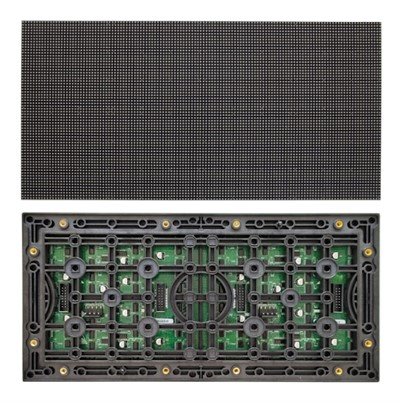
At the end of the day, optimizing an outdoor LED video wall isn’t about guessing or cutting corners. It’s about matching every part of the wall—panels, pitch, control system, frame—to your exact location, content, and long-term needs. It’s about investing in quality, not the cheapest option, and sticking to a regular maintenance schedule. I’ve seen walls that ran perfectly for 7 years, and walls that died in 18 months, all because of the choices made during selection, installation, and upkeep. If you’re planning an outdoor LED video wall—whether it’s for a retail store, a sports venue, an event, or a public space—the best way to make sure it performs at its best is to work with someone who knows the outdoors, not just the indoor LED space. We’ve helped hundreds of clients across every type of location, from beachfront boardwalks to mountain ski resorts, get the most out of their LED walls, and we’re ready to help you too. If you’re ready to talk through your project, no obligation, we can go over everything from panel selection to maintenance plans to make sure your wall works as hard as you need it to, whatever the weather, whatever the time of day.
Indoor LED Display References
- LED Professional Association. Outdoor LED Display Performance Guidelines, 2022.
- Display Supply & Controls Association. Optimal Pixel Pitch Calculations for Large-Format LED Screens, 2021.
- National Weather Service. Environmental Factors Impacting Outdoor Electronic Equipment Performance, 2023.
- Society of Motion Picture and Television Engineers. Content Optimization Standards for Outdoor LED Displays, 2022.
- International Protection Marking (IP) Code Council. IP Rating Requirements for Outdoor Commercial Displays, 2021.
Shenzhen Starcolor Optoelectronics Co., Ltd.
As one of the most professional outdoor led video wall manufacturers and suppliers in China, we’re featured by quality products and good price. Please rest assured to wholesale discount outdoor led video wall in stock here from our factory. Customized orders are welcome.
Address: 2nd floor, Building A, Hongjingda Industrial Park, Shiyan town, Bao’an District, Shenzhen
E-mail: starcolorled@outlook.com
WebSite: https://www.starcolordisplay.com/
