If you’ve ever relied on industrial heating processes—whether for chemical manufacturing, food processing, asphalt production, or any operation that needs controlled, high-temperature heat without water or steam—you know hot oil boilers are workhorses. But if you’re new to specifying or maintaining this equipment, it’s easy to overlook a single component that dictates almost everything about your boiler’s performance: the burner. As someone who’s supplied hot oil boilers to industrial operations across North America for over 18 years, I’ve seen firsthand how a misconfigured, outdated, or mismatched burner can turn a reliable heat source into a costly headache. Let’s break down exactly what the burner does, why it’s non-negotiable for your hot oil boiler’s success, and how partnering with a supplier who prioritizes burner compatibility makes all the difference. Hot Oil Boiler
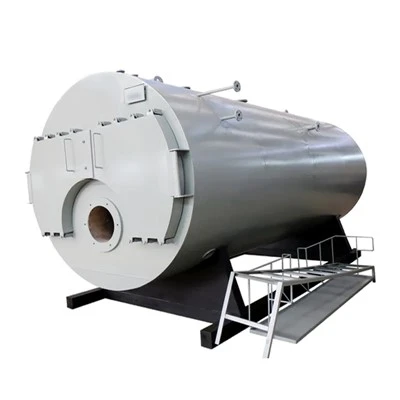
First, let’s ground this in the core function of a hot oil boiler. Unlike steam boilers, which heat water to generate steam that transfers heat via condensation, hot oil boilers use a synthetic or mineral-based thermal fluid (usually operating between 200°F and 600°F, with some specialty models hitting 750°F) to move heat through your process piping. Water would cause major issues here: at those high temperatures, water flashes to steam, creating pressure surges that can damage piping, cause leaks, or even lead to catastrophic failures. The hot oil system relies on consistent, precise heat input to keep the thermal fluid at a stable temperature—this is where the burner comes in, as the primary energy converter for the boiler.
Let’s get specific on the burner’s roles, starting with the most basic: it converts fuel into usable heat energy, and does so far more precisely than many people assume. Hot oil boilers run on a range of fuels, depending on your operation’s access and needs: natural gas, diesel, biogas, even waste fuels like wood chips or process off-gas. The burner’s job isn’t just to light the fuel and create a flame—it’s to atomize liquid fuels (like diesel) into tiny, uniform droplets, mix them with the right amount of air, and maintain a combustion process that’s as efficient as possible. A poorly designed burner, for example, might spray diesel droplets too large, so they don’t fully burn, wasting fuel and producing soot that clogs your boiler’s heat exchanger. For natural gas, a bad burner might mix too much or too little air, leading to incomplete combustion, excess emissions, or flame instability that causes the boiler to shut down unexpectedly mid-process.
That precision is critical for hot oil systems because thermal fluid is sensitive to overheating. If the burner delivers too much heat, even for a few minutes, the fluid can break down. Thermal fluid degradation is a huge problem: it forms sludge that builds up in heat exchangers, reduces heat transfer efficiency, and can cause fluid to turn acidic, corroding piping. I once had a customer in the asphalt industry who skipped upgrading their old burner when they replaced a worn-out heat exchanger. Their old burner was rated for 10% excess air, but the new heat exchanger required 3% excess air to operate without overheating. Within six months, the thermal fluid had degraded so badly they had to flush the entire system and replace 200 feet of piping—costing them $120,000 in downtime and parts. That’s not an isolated incident; burner mismatch is one of the top causes of hot oil boiler failures I see in service calls.
Next, the burner controls the boiler’s output, which ties directly to process stability. Most industrial processes can’t handle wild temperature swings: for a food processor making chocolate, for example, a 10°F spike could ruin a batch of meltable couverture, costing thousands in wasted product. For a chemical plant producing resins, inconsistent heat input can lead to off-spec product that requires rework, delaying shipments and damaging customer trust. Modern burners use modulating controls, meaning they adjust their heat output continuously to match your process’s demand, rather than just turning on and off (which is called “on-off” control, common in less sophisticated systems). A quality burner will work with the boiler’s PLC (programmable logic controller) to adjust fuel flow and air intake in real time: if your process needs 100,000 BTUs right now, the burner delivers exactly that; if demand drops to 50,000 BTUs, it scales back without dropping the flame or wasting fuel.
This modulation also boosts efficiency, which is a big selling point for industrial operations focused on cutting energy costs. Hot oil boilers have an average thermal efficiency of 85-90%, but that’s only when paired with a properly matched burner. A study from the Industrial Energy Technology Council found that upgrading an outdated burner to a modern, modulating model can cut fuel costs by 12-15% for hot oil systems. How? A well-calibrated burner reduces excess air (the extra oxygen that doesn’t contribute to combustion) from 15% to 3%, which lowers the amount of heat lost up the stack. It also eliminates the “idling” waste that comes with on-off burners, which cycle 10-15 times per hour, each cycle wasting the heat built up in the combustion chamber. I worked with a textile manufacturer last year who switched from an old on-off burner to a modulating model; their monthly fuel bill dropped by $1,800, and their process temperature uniformity improved by 4°F, reducing product waste by 7% annually.
Another often-overlooked role of the burner is emissions compliance. Industrial operators face strict regulations on nitrogen oxides (NOx), carbon monoxide (CO), and particulate matter—especially in areas with heavy industrial activity, like the U.S. Northeast or European Union. Older burners, especially those made before 2010, can produce high levels of NOx, which contributes to smog and acid rain. Modern low-NOx burners use design tweaks like flue gas recirculation (FGR), which diverts a portion of the exhaust gas back into the combustion chamber to lower flame temperature, reducing NOx output by 70% or more. I’ve had multiple customers come to me because they received a compliance notice that required them to upgrade their burner; in most cases, replacing a high-emission burner is far cheaper than retrofitting existing equipment to meet regulations. That’s a key point: when you invest in a hot oil boiler, you’re not just buying a heat source—you’re investing in long-term compliance, and the burner is the component that makes that possible.
Now, let’s talk about the hidden costs of ignoring burner maintenance, because even a great burner won’t perform if it’s neglected. The burner is exposed to harsh conditions: high temperatures, soot, and variable fuel quality, all of which can cause parts to wear out. Air filters can get clogged with dust, reducing the amount of combustion air; fuel nozzles can erode, leading to uneven atomization; flame sensors can get coated in soot, causing false shutdowns. The result? Increased fuel use, inconsistent heat, and unplanned downtime. I once had a food processing customer who thought their boiler was broken, only to find that a $150 flame sensor had gotten caked in flour dust, causing the burner to shut down every 20 minutes. They spent $8,000 on service calls over three months before we diagnosed the issue—all because of a small, neglected burner part.
So, what does this mean when you’re choosing a hot oil boiler, and selecting a supplier to work with? It means you don’t want a supplier who just pairs any burner with a boiler to hit a price point. You want a supplier who does a full load calculation for your process: how much heat you need, what fuel you use, your operating temperature range, and compliance requirements—then matches that to a burner that’s optimized for your specific needs. For example, a burner that works well for natural gas might not be suitable for biogas, which has a lower BTU content; a high-output burner for asphalt might be too powerful for a small food processing operation. A reputable supplier will also offer ongoing support: regular burner inspections, calibration, and replacement parts, because even the best burner needs routine care to last 10-15 years (the average lifespan of a quality industrial burner).
I’ve seen too many operations cut corners on burner selection, only to regret it. A customer in the printing industry once bought a cheap hot oil boiler from a supplier who used an off-the-shelf burner, not realizing their process required consistent heat for drying ink. Within a year, the burner failed three times, leading to 12 hours of downtime each time—costing them $50,000 in lost production. When they came to me, we removed the mismatched burner, installed a modulating, low-NOx model calibrated to their process, and added a maintenance plan. Their downtime dropped to zero, and their fuel costs went down 13% within six months. That’s the difference between a supplier who sees burners as an afterthought and one who sees them as the core of your system.
At the end of the day, the burner is the unsung hero of the hot oil boiler. It’s the component that turns fuel into the exact heat your process needs, keeps your product on spec, cuts your energy costs, and ensures you stay compliant with emissions rules. You can have the most expensive heat exchanger, the most durable piping, and the smartest controls, but if your burner is mismatched, outdated, or poorly maintained, your whole system will underperform.

If you’re currently evaluating hot oil boilers, dealing with inconsistent heat, rising fuel costs, or upcoming emissions regulations, I’d encourage you to reach out to discuss your needs. We specialize in pairing custom-built hot oil boilers with burners optimized for your specific operation, and we offer ongoing support to keep your system running at peak efficiency. Don’t let a small component derail your process—let’s work together to find the right solution for your business.
Biomass Steam Boiler References
- Industrial Energy Technology Council. (2022). Hot Oil Boiler Efficiency and Optimization Report.
- National Fire Protection Association. (2021). Standard for Hot Oil Heating Systems (NFPA 87).
- U.S. Environmental Protection Agency. (2020). Industrial Combustion Emissions Control Guidelines for Boilers and Heaters.
Xinxiang Huayuan Container Equipment Co., Ltd.
With abundant experience, we are one of the most reliable hot oil boiler manufacturers and suppliers in China. We warmly welcome you to buy durable hot oil boiler made in China here from our factory. If you have any enquiry about cooperation, please feel free to email us.
Address: No.2, South Road, Industrial Cluster Zone, Genghuang Township, Fengquan District, Xinxiang City, Henan Province
E-mail: cncd527@gmail.com
WebSite: https://www.huayuanequipment.com/
