Hey there! I’m a supplier of five – axis machining centers, and I’m super excited to chat with you about why a five – axis machining center is a game – changer compared to a three – axis one. Five-axis Machining Center

Let’s start with the basics. A three – axis machining center can move along the X, Y, and Z axes. It’s been around for a long time and has been the go – to for many manufacturing tasks. It’s simple, reliable, and can handle a wide range of jobs. But when it comes to more complex and intricate work, it starts to show its limitations.
One of the biggest advantages of a five – axis machining center is its ability to access multiple sides of a workpiece without re – clamping. In a three – axis setup, if you want to machine different sides of a part, you have to stop the machine, re – position the workpiece, and then start the machining process all over again. This not only takes a lot of time but also increases the risk of errors. With a five – axis machine, the tool can move along two additional rotational axes, usually A and B or A and C. This means that the machine can reach all sides of the workpiece in one setup. For example, if you’re making a complex aerospace part with curved surfaces and holes on multiple sides, a five – axis machine can do it in one go. It saves a ton of time and reduces the chances of misalignment that can occur during re – clamping.
Another great thing about five – axis machining is the ability to create more complex geometries. Three – axis machines are great for simple shapes like cubes, cylinders, and flat surfaces. But when you need to make parts with undercuts, compound angles, or free – form surfaces, a three – axis machine just can’t cut it. A five – axis machining center, on the other hand, can easily handle these types of geometries. The additional rotational axes allow the tool to approach the workpiece from different angles, enabling the creation of parts that were previously impossible or very difficult to make. This is especially important in industries like automotive, aerospace, and medical, where complex parts are the norm.
Accuracy is also a major advantage of five – axis machining centers. Since the machine can access all sides of the workpiece without re – clamping, there’s less chance of errors due to misalignment. The tool can be positioned more precisely, resulting in higher – quality parts. In addition, the five – axis machine can use shorter cutting tools because it can approach the workpiece from different angles. Shorter cutting tools are stiffer and less likely to deflect, which further improves the accuracy of the machining process. This is crucial in industries where precision is key, such as the production of high – end medical implants or aerospace components.
Productivity is another area where five – axis machining centers shine. As I mentioned earlier, the ability to machine multiple sides of a part in one setup saves a lot of time. In addition, the five – axis machine can use more efficient cutting strategies. For example, it can perform simultaneous machining on multiple surfaces, which reduces the overall machining time. This means that you can produce more parts in less time, increasing your production capacity and profitability.
Cost – effectiveness is also worth considering. While five – axis machining centers are generally more expensive to purchase than three – axis ones, they can actually save you money in the long run. The increased productivity and reduced setup time mean that you can produce more parts with less labor. In addition, the higher accuracy and quality of the parts mean that there’s less scrap and rework, which also saves money. And since the five – axis machine can handle more complex jobs, you may be able to take on higher – value projects that were previously out of reach.
Let’s talk about flexibility. A five – axis machining center can be used for a wide variety of applications. It can handle small, intricate parts as well as large, heavy components. Whether you’re making a tiny dental implant or a large aerospace wing, a five – axis machine can get the job done. This flexibility makes it a great investment for manufacturers who need to produce a diverse range of parts.
In terms of surface finish, five – axis machining centers can produce a much better finish compared to three – axis machines. The ability to approach the workpiece from different angles allows the tool to make smoother cuts, resulting in a better surface finish. This is important in industries where a high – quality surface finish is required, such as the production of consumer electronics or high – end automotive parts.
Now, I know that switching to a five – axis machining center may seem like a big step. It requires some training for your operators and a bit of an investment. But the benefits far outweigh the challenges. If you’re still using a three – axis machine and struggling with complex parts, long setup times, or low – quality finishes, it’s time to consider upgrading to a five – axis machining center.
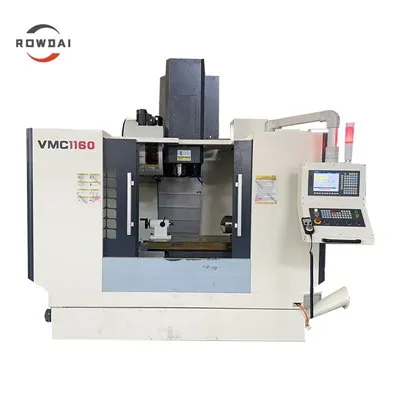
If you’re interested in learning more about our five – axis machining centers or want to discuss how they can benefit your business, don’t hesitate to reach out. We’re here to help you make the right decision and take your manufacturing to the next level.
Cylindrical Grinding Machine References:
- Manufacturing Technology Handbook
- Precision Machining Industry Reports
Henan Rowdai Machinery Equipment Co., Ltd.
As one of the most professional five-axis machining center manufacturers in China, we’re featured by quality products and good price. Please rest assured to buy high-grade five-axis machining center for sale here from our factory. If you have any enquiry about cooperation, please feel free to email us.
Address: Building 9, E-Commerce Industrial Park, High-Tech Zone, Zhengzhou, Henan, China
E-mail: rowdai@rowdai.com
WebSite: https://www.rowdai.com/
