Hey there, tattoo enthusiasts and artists! I’m a supplier in the tattoo game, and I’m stoked to chat about the different types of tattoo motors. Whether you’re a seasoned pro or just starting out, understanding the various kinds of tattoo motors is crucial for getting the best results in your art. Tattoo Motor

Let’s kick things off with coil tattoo motors. These are the old – school players in the tattoo industry. Coil motors work on the principle of electromagnetism. Inside the motor, there are coils of wire, and when an electric current passes through these coils, it creates a magnetic field. This magnetic field then causes an armature bar to move up and down, and that movement is what drives the tattoo needle.
One of the big advantages of coil tattoo motors is their power. They pack a punch and can handle a wide range of tattooing styles, from bold and black traditional tattoos to detailed color work. They’re also pretty customizable. You can adjust the voltage and the spring tension to get the exact speed and force you need for different parts of a tattoo. For example, if you’re doing a fine line, you can lower the voltage to make the needle move more gently.
However, coil motors do have their downsides. They can be a bit noisy. The constant buzzing sound might not be a big deal for some artists, but for others, it can be a bit of a distraction. They also tend to be bulkier and heavier compared to some other types of motors. This can make them tiring to hold for long periods, especially during large – scale tattoo sessions.
Next up, we’ve got rotary tattoo motors. These motors are a more modern addition to the tattoo world. Instead of using coils and an armature bar, rotary motors use a rotating mechanism. A small motor spins a cam or an eccentric, and this rotation is translated into the up – and – down motion of the needle.
Rotary motors are known for their smoothness. They provide a consistent and even movement, which is great for creating clean lines and filling in areas with color. They’re also much quieter than coil motors. This is a huge plus, both for the artist and the client. You won’t have to deal with that loud buzzing, and it creates a more relaxed environment during the tattoo process.
Another advantage of rotary motors is their compact size and light weight. They’re easier to handle, especially for delicate work. If you’re doing a small, intricate tattoo on a client’s finger or wrist, a rotary motor will give you better control.
But like everything, rotary motors aren’t perfect. They might not have the same raw power as coil motors. So, if you’re doing a very large, bold tattoo that requires a lot of force to get the ink deep into the skin, a rotary motor might struggle a bit.
Then there are hybrid tattoo motors. As the name suggests, these motors combine the features of both coil and rotary motors. Hybrid motors try to take the best of both worlds. They use a combination of electromagnetic and rotating mechanisms to drive the needle.
One of the benefits of hybrid motors is their versatility. They can offer the power and control of a coil motor when needed, while also providing the smoothness and quiet operation of a rotary motor. This makes them suitable for a wide variety of tattooing styles and techniques.
However, hybrid motors can be a bit more complex and expensive. Since they have more components and a more sophisticated design, they can be harder to repair if something goes wrong. And the price tag might be a bit steep for some artists, especially those who are just starting out.
Now, let’s talk about linear tattoo motors. These are a relatively new type of motor in the tattoo industry. Linear motors work by using a direct linear motion to drive the needle. Instead of using a rotating or electromagnetic mechanism to convert motion, the needle moves in a straight – line path.
Linear motors are known for their precision. They can provide extremely accurate control over the needle movement, which is ideal for fine – line work and detailed tattoos. They’re also very efficient, using less energy compared to other types of motors.
But linear motors are still a bit niche. They’re not as widely used as coil or rotary motors, and finding replacement parts or getting expert advice on them can be more challenging.
As a tattoo motor supplier, I’ve seen firsthand how different types of motors can impact an artist’s work. Choosing the right motor depends on a lot of factors, like your personal style, the type of tattoos you usually do, and your budget.
If you’re just starting out, a rotary motor might be a great choice. They’re easy to use, quiet, and affordable. You can get a feel for tattooing without having to worry too much about the technical aspects. But if you’re an experienced artist looking for more power and customization, a coil motor could be your go – to.
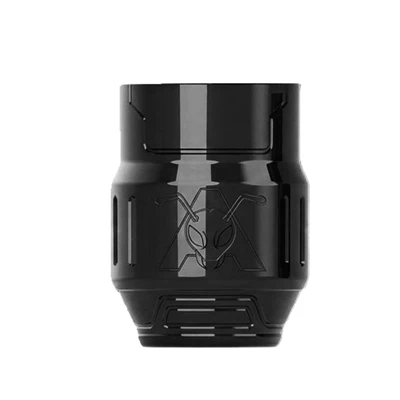
I’m here to help you find the perfect tattoo motor for your needs. Whether you’re interested in trying out a new type of motor or just need some advice on what might work best for you, don’t hesitate to reach out. Let’s start a conversation about how we can take your tattooing to the next level. Feel free to get in touch with me to discuss your options and start the procurement process.
Rotary Tattoo Machine References:
- Tattoo Equipment Manuals
- Industry Reports on Tattoo Motor Technologies
- Conversations with Professional Tattoo Artists
Zhuji Taituo Machinery Technology Co., Ltd.
Zhuji Taituo Machinery Technology Co., Ltd. is one of the best tattoo motor manufacturers and suppliers in China for over 20 years, also supports customized service. Welcome to buy advanced tattoo motor made in China here and get quotation from our factory. For price consultation, contact us.
Address: 101, Building 12, Youdi, No. 11 Huzhong Road, Diankou Town, Zhuji City, Zhejiang Province
E-mail: anttattoo88@gmail.com
WebSite: https://www.antinktattoo.com/
