Hey guys, let’s cut to the chase. I’m a coated paper supplier, and I get asked this question all the time: “Can coated paper be used for envelope printing?” It seems like a super straightforward yes/no at first, but there’s way more to it than that—especially when you’re dealing with envelopes, which aren’t just flat sheets. They’re folded, glued, and often go through the wringer in the mail system. Let me break this down like I would to a regular printer or small business owner who’s just trying to get their envelopes right. Coated Paper
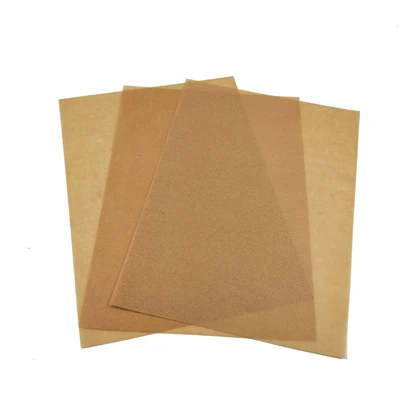
First, let’s remember what coated paper actually is, right? It’s plain paper that gets a thin layer of clay (or sometimes other materials) applied to one or both sides. That coating makes it smooth, so ink sits on top instead of absorbing into the paper fibers. You get way crisper, more vibrant prints—no blurry logos, no faded text from the post office’s scanning machines. That’s the good stuff. Uncoated paper, on the other hand, soaks up ink like a sponge, which is fine for newsletters but not for a high-end brand’s envelope.
But wait—envelopes have specific needs that regular print jobs don’t. They’re not just going through a laser printer or a digital press; they’re fed through envelope folding machines, glued, run through sorting machines, banged around in bags, and sometimes exposed to moisture. So can coated paper handle that? Short answer: yeah, most of the time. But it depends on which type of coated paper you pick, and how you print it.
Let’s start with the two main types of coated paper we supply: gloss coated and matt coated. Gloss is super shiny, makes colors pop—perfect for bold branding, like if a startup wants their envelope to stand out in a pile of bills. The problem with gloss is that it can be slippery when you’re feeding it through an envelope stuffer, and if it’s too heavy, it might jam. But if you get a medium-weight gloss coated paper (like 100-120 gsm), that’s solid for envelopes. Matt coated is a bit less slippery, has a subtle, professional look, and still gives you way better print quality than uncoated. A lot of corporate clients go for matt because it doesn’t show fingerprints, which is a plus if you’re handling a lot of envelopes.
Now, the big one: envelope construction. Envelopes are made by folding a sheet of paper into a rectangle, gluing the flaps. If you use coated paper, you have to make sure the coating doesn’t crack when you fold it. That’s called “fold resistance,” and it’s make-or-break. Some cheaper coated papers have a hard, brittle coating that flaks off when you fold it—you get little white specks on the envelope, which looks trashy. We test all our coated papers for fold resistance, so that’s why we always tell people to go for “envelope-grade coated paper.” It has a more flexible coating that bends with the paper instead of cracking. Trust me, nothing kills a good print job faster than a bunch of envelopes with flaking coating.
Then there’s the printing method. If you’re using digital printing (like most small businesses do now), coated paper is perfect because the ink dries on the surface, no smudging. But if you’re using offset printing for big runs, you have to make sure the coated paper has good “ink holdout.” That just means the ink sticks to the coating, not beads up. All our coated papers are formulated to work with both digital and offset, so you don’t have to stress about that. We’ve had clients print 10,000 envelopes with offset and zero issues—colors stayed bright, no smears.
But wait, are there cases where coated paper is a bad idea? Yeah, a couple. First, if you’re making a “window envelope.” The window part is a plastic patch, and coated paper can sometimes have a coating that doesn’t adhere well to the plastic. Or if the glue you’re using to seal the envelope doesn’t stick to the coated surface. Wait, actually, that’s a common mistake. If you use regular white glue on coated paper, it might not bond—so you have to use a glue that’s designed for coated surfaces. We usually recommend our clients test a sheet first before doing a big run, just to make sure the glue sticks. Another case: if you’re sending envelopes through very old, vintage sorting machines that use a lot of pressure. Gloss coated paper might be too slippery, but matt coated works fine. We have a few long-term clients who use matt coated for all their direct mail envelopes and haven’t had a single jam in years.
Also, let’s talk about durability. Envelopes need to hold up during shipping. Coated paper is more resistant to moisture than uncoated, right? Because the coating acts as a barrier. So if it rains a little when the envelope’s in the mail, your print won’t run. That’s a huge plus for anyone doing direct mail. Uncoated envelopes would get all blurry if they get wet, which is a waste of money. And tear resistance—coated paper is a bit sturdier, so it’s less likely to get ripped when it’s being stuffed or handled by the post office.
I know some people out there still swear by uncoated envelopes, especially for formal letters. But let’s be real—formal doesn’t have to mean boring. A matt coated envelope with a subtle logo printed on it looks way more professional than a thin uncoated one that feels cheap. And if you’re worried about “too shiny” for a law firm or a bank, matt is the way to go. It has a sophisticated, understated look that still has that high-quality print.
Let me give you an example. Last quarter, we had a client who’s a local marketing agency. They needed 5,000 envelopes for a big product launch—gloss coated, bright blue logo, their brand colors. They used a cheap uncoated paper for a smaller run before, and the colors were so dull, people thought it was a generic flyer. When they switched to our medium-weight gloss coated paper, the print was exactly how they designed it—bright, crisp, no blurriness. They told me they got so many compliments on the envelopes, and their direct mail response rate went up 20% because the envelopes stood out. That’s the real deal.
Another thing: cost. A lot of people think coated paper is more expensive, but when you consider that you don’t have to reprint envelopes because of bad print quality or flaking coating, it’s actually cheaper in the long run. The difference per sheet is tiny, but for a 10,000 envelope run, that’s like $5-$10 more—nothing, when you compare it to the cost of redoing the whole thing.
Wait, let’s address the elephant in the room: “What about postage costs?” Does coated paper make the envelope heavier? Only if you pick a super heavy weight. Our standard envelope-grade coated papers are 100-120 gsm, which is the same weight as a good uncoated envelope. Post offices don’t charge extra for that—they only charge extra if it’s over a certain thickness, like if you use a really thick coated paper that’s rigid. So stick to medium weight, and you’re golden.
I should also mention that we work with printers to test coated paper for envelope printing all the time. If you’re not sure which type to pick, just reach out. We can send you free samples of our gloss and matt coated envelope paper, so you can test the fold, the print quality, the glue adhesion—all that stuff. No strings attached.
Let’s wrap this up. Can coated paper be used for envelope printing? Absolutely—you just have to pick the right type: envelope-grade, medium-weight, flexible coating (so it doesn’t crack when folded). Gloss works for bold brands, matt works for professional, understated ones. It gives you way better print quality than uncoated, is more durable, stands up to moisture, and won’t jam in most machines. The only cases where it’s not ideal are window envelopes (unless you test) or if you use cheap glue that doesn’t adhere.
If you’re thinking about switching to coated paper for your next envelope run, or you just want to test some samples, hit me up. I’m here to help you pick the right paper for your project, no confusing jargon, no upselling. Just straight answers, and paper that works for what you need.
Coated Paper References:
- Technical Association of the Pulp and Paper Industry. (2021). Coated Paper Properties for Packaging and Print Applications. TAPPI Press.
- International Council of Postal Operators. (2022). Guidelines for Envelope Construction and Postage Eligibility. ICOPO Publications.
- Printing Industries of America. (2023). Best Practices for Coated Paper Use in Envelope Manufacturing and Printing. PIA Technical Bulletin No. 419.
Zhejiang Xinzhongxin Paper Industry Shares Co., Ltd.
With abundant experience, we are one of the most professional coated paper manufacturers and suppliers in China. Please rest assured to buy bulk premium coated paper for sale here from our factory. If you have any enquiry about cooperation, please feel free to email us.
Address: NO.391-2, CHANGHE ROAD, CHANGAN, HAINING, ZHEJIANG
E-mail: info@xzxpaper.com
WebSite: https://www.zhongxinluhuan.com/
