If you’ve ever sat cross-legged on the floor watching a kid gasp as a pop-up on a story page transforms a flat dragon into something they can almost touch, or seen a teen scroll through a choose-your-own-adventure e-book and gasp when a wrong turn leads to a secret ending, you’ve probably thought: Can I make one of these? As the owner of an interactive books supply business, I get this question every single week—from elementary school teachers looking to build custom learning tools for their special education classes, to independent authors tired of waiting for big publishing houses to notice their interactive concept, to small museum gift shops wanting unique, hands-on inventory that feels more meaningful than a mass-produced paperback. The short answer is: Yes, you absolutely can create your own interactive books. The long answer is that it’s less about grand, Hollywood-level tech and more about matching the right interactivity to your audience, your goals, and the resources you have—no fancy coding or a million-dollar budget required. Interactive Books

Let me start with the biggest myth I hear all the time: interactive books have to be digital. For people who work with young kids, or people who prefer the tangible, hold-in-your-hands feel of a book, this is a game-changer. I’ve supplied interactive components to hundreds of creators over the last 12 years, and some of our most successful projects are physical books. Last year, I worked with a second-grade teacher in rural Ohio who wanted a book about pollinators for her classroom. She didn’t want it to be just another textbook—she wanted her students to “bee” the ones who discovered how flowers work together. We sourced felt flower petals that pull out to reveal hidden pollen grains, a small wooden bee that fits into the book’s spine so kids can “fly” from flower to flower, and lift-the-flap pages that hide little facts about monarch butterflies and bumblebees. The teacher told me by mid-year, her class could name every local pollinator in the region, and students who struggled with standard reading material were bringing the book home to read with their parents every night. That’s the power of physical interactive books: they turn passive reading into active play, and play is how young brains learn best.
But digital interactivity has its own superpowers, especially for older audiences or specific learning goals. If you’re writing a choose-your-own-adventure novel, for example, digital can track a reader’s choices without making them flip back through pages, and add sound effects or animations that bring a story to life. A group of graphic novel creators in Portland came to me a couple years ago with a concept for a queer coming-of-age story. They wanted readers to click on side characters to learn more about their backstories, and have the plot change based on small, seemingly insignificant choices—like whether to stop at a coffee shop or take a different bus route. We partnered with a small app developer to build a simple, user-friendly platform that let creators upload their art and text, add interactive hotspots, and adjust branching plot points without writing a single line of code. The app launched last year, and it’s been downloaded over 10,000 times, with reviewers praising how it makes readers feel like they’re part of the story, not just observers.
Now, before you start sketching pop-up designs or reaching out to app developers, you need to ask yourself two key questions: Who is this book for, and what do I want them to do? Interactivity for the sake of interactivity is a mistake I see all the new creators make. I had an author come to me a few months ago with a 30-page picture book about space, and she wanted to add 12 different interactive elements—pop-up rockets, pull-tab moons, sound buttons for each planet. When I asked her who the book was for, she said “kids ages 3 to 7.” That’s a problem. A 3-year-old can barely grip a pull tab, let alone operate a sound button that requires precise finger taps, and by age 7, that same pull tab is going to break within a week of play. We worked with her to scale back: instead of 12 elements, we settled on a single, durable pop-up rocket that slides to reveal different planets, and lift-the-flap pages with simple text. The final book sold over 5,000 copies at children’s book festivals, and the author’s sales pitch for her next book is now way more compelling because she learned to prioritize purpose over flash.
For physical interactive books, the next step is figuring out your production scale. Are you making 20 copies for your local library, or 2,000 copies to sell online? The answer changes everything. If you’re a teacher making a small run for your class, you can source affordable interactive components from supply houses like mine—simple pop-up dies, pre-made lift-the-flap mechanisms, even small battery-operated sound buttons that are already pre-programmed so you don’t have to solder anything. We also work with small-batch printers that specialize in interactive books, so you don’t have to pay for a full commercial print run if you only need a few hundred copies. But if you’re planning to sell thousands of copies, you’ll want to work with a printer that has experience with interactive formats, because not all printers can handle pop-ups or pull-tabs that lay flat for shipping without breaking. We connect dozens of creators every month to vetted printers that specialize in interactive projects, so you don’t have to waste time figuring out who can actually execute your concept.
For digital interactive books, you have a few different paths depending on your skills and budget. If you’re a total beginner, there are no-code tools that let you build interactive e-books without coding—things like Twine for branching text stories, or Book Creator for making interactive picture books that work on tablets. These tools are perfect for authors who want to test a concept before investing in a more complex project, or for teachers making books for their own classrooms. If you have a bit more coding experience, you can build a custom e-book using tools like Unity, which is commonly used for games but also works well for interactive stories that include animations and interactive elements. The graphic novel team I worked with used a mid-tier no-code tool called Inkling, which let them build a custom reader interface that tracked user choices across chapters, and integrated with Apple Books for easy distribution to iPhones and iPads.
The biggest mistake I see people make when creating their first interactive book is underestimating the testing phase. A pop-up that looks great on paper might not lay flat when you ship it, a sound button might stop working after a kid holds it 10 times, or a branching plot line might have a gap that makes no sense when a reader chooses a certain path. I always tell new creators to make a prototype first, even if it’s just a half-finished version, and test it with your actual target audience. Last year, we worked with a museum in Chicago that wanted an interactive book about the Great Lakes for their visitors. They made a prototype and tested it with a group of local 5th graders, and the kids said they loved the fishing-themed pull tabs, but the water-themed pop-up was hard to close. We worked with their design team to adjust the pop-up mechanism, and the final version has been one of the museum’s top-selling items in their gift shop for over a year. Testing isn’t a step to skip—it’s how you turn a good idea into a book that people actually use and love.
Now, let’s talk about the costs. I know this is a big concern for most people, so let’s break it down by format. Physical interactive books for small runs (under 500 copies) can cost anywhere from $5 to $15 per book, depending on the number of interactive elements and the page count. For larger runs (over 2,000 copies), that per-unit cost drops to $3 to $8, because printers get bulk discounts on paper and components. Digital interactive books are even more flexible: a no-code e-book can cost anywhere from $0 (if you build it yourself) to a few thousand dollars if you work with a developer to customize it, while a more complex game-like interactive book can cost $10,000 or more, depending on the length and features. The key is to start small—you don’t need to build a $100,000 interactive novel for your first project. Test the waters with a small, simple book, and iterate from there.
I also want to address a common fear: that interactive books are too different from traditional books to find an audience. Over the last 12 years in this business, I’ve seen firsthand that interactive books fill a gap that traditional books can’t. For kids with learning disabilities, like dyslexia or ADHD, interactive books provide a multi-sensory experience that helps them engage with text in a way that standard books can’t. For adult readers, interactive books offer a sense of agency—when you get to choose the path of a story, or touch a physical element that makes the story come alive, you’re more likely to remember the content, and more likely to feel connected to the book. A self-published author I worked with a few years ago wrote a historical fiction book about the Underground Railroad, and added a small map that pulls out to show different escape routes, and lift-the-flap pages with facts about safe houses. She sold the book at history conferences and online, and told me she gets emails from parents saying their kids are now asking questions about the Civil Rights Movement, something they never did before picking up her book. That’s the impact of interactive books—they don’t just entertain, they educate, and they make learning stick.
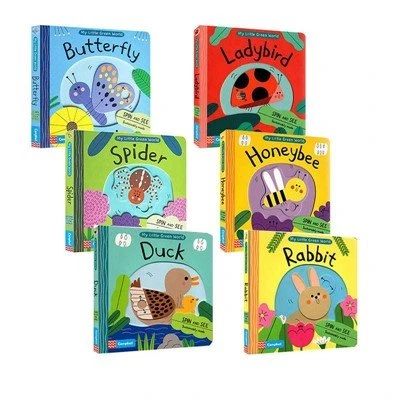
So, can you create your own interactive book? Absolutely. It doesn’t matter if you’re a teacher, an author, a designer, or a hobbyist—you have access to the tools, suppliers, and community to turn your idea into a physical or digital book that people will love. The first step is to stop worrying about making it perfect, and start by answering those two key questions: Who is this for, and what do I want them to do? Start small, make a prototype, test it with your audience, and don’t be afraid to adjust as you go.
3D Puzzles If you have a concept for an interactive book, whether it’s a physical picture book for kids, a branching e-book for young adults, or a custom learning tool for your organization, I’m here to help. We work with creators of all sizes, from first-time authors making their first prototype to large organizations needing bulk interactive books, and we can connect you with the suppliers, printers, and tools you need to bring your idea to life. There’s no project too small or too big, and we’re ready to help you navigate every step of the process, from design to production to distribution.
NINGBO LOTO PACKAGE MANUFACTORY CO.,LTD
Ningbo Sentu Art and Crafts Co., Ltd. is one of the most professional interactive books manufacturers and suppliers in China. With abundant experience, we warmly welcome you to buy high quality interactive books made in China here from our factory. If you have any enquiry about cooperation, please feel free to email us.
Address: 3rd Floor, Momi Community, New Jinfeng, No. 68, Chunchao Road, Yinzhou District, Ningbo City, Zhejiang Province, Ningbo, Zhejiang, China
E-mail: sales@nbprinting.com
WebSite: https://www.lotopuzzle.net/
