If you’ve ever spent time around industrial reactors, you know they’re the unsung workhorses of countless industries—from chemical manufacturing and pharmaceuticals to food processing and energy production. I’ve been in this game as an industrial reactor supplier for over a decade, and let me tell you: those big, sturdy vessels don’t just run on fuel or raw materials. They take a serious beating every single day, and the wear and tear that creeps up on them can sneak up on even the most well-maintained operations if you’re not paying attention. Industrial Reactor
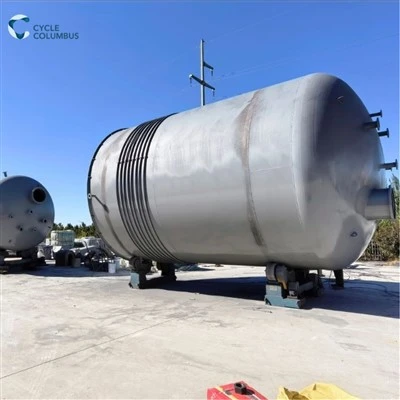
A lot of plant managers I chat with think reactor issues are all about “old age,” but that’s rarely the case. Most of the problems stem from specific, preventable wear and tear that happens in different parts of the vessel, depending on what it’s processing, how hard it’s running, and even little things like pressure fluctuations that no one bothers to log. Today, I want to break down the most common wear and tear problems we see out in the field, no fancy jargon, just real stuff we face every time we service or install a new reactor.
First up, and probably the most frequent culprit: abrasion and erosion. If your reactor is handling anything with solid particles—like catalyst dust in petrochemical plants, or pulp fibers in paper manufacturing—those tiny, hard bits act like sandblasters inside the vessel. I once worked with a client making fertilizers, where their reactor was churning up a mix of urea and limestone particles. After 18 months, we pulled the interior lining and found the bottom section was 30% thinner than when it was installed. The solid particles were hitting the wall at high velocity, especially where the flow of material changes direction—like near inlet nozzles, baffle plates, or the bottom of the vessel. What’s tricky about this is that it doesn’t happen all at once; it’s gradual. A few microns of wear here and there might not seem like a big deal, but over time, it eats through the protective lining, and suddenly you’ve got a leak or a crack that shuts down production for days. Even if you’re processing liquids, dissolved solids or even corrosive chemicals can act as abrasives too—water with salt, for example, wears away metal surfaces way faster than plain water.
Next, corrosion. This is the silent killer of reactors, hands down. Not just the “metal rusts” kind of corrosion—there are different types, each caused by what’s going on inside the reactor. Uniform corrosion is the one that eats across a whole surface, usually from exposure to acids or bases. For example, in pharmaceutical reactors that use strong acids to synthesize drugs, the interior wall can corrode evenly over time, weakening the structure little by little. Then there’s pitting corrosion, which is way more dangerous because it’s hard to spot until it’s too late. Pits are tiny, shallow holes that form where material settles or where the protective coating gets scratched (even a tiny scratch from a tool during installation can turn into a pit). I had a client in the mining industry a few years back whose reactor had a tiny pit that no one noticed. Six months later, the pit grew and caused a leak, and by the time they found it, they’d lost thousands of dollars in spilled material and downtime. Another type I see often is crevice corrosion, which happens in tight, hard-to-reach gaps—like between the reactor wall and a bolt, or under a gasket. Liquid and chemicals get trapped there, and oxygen levels drop, making the metal corrode rapidly. It’s the kind of thing you can’t check with a quick visual inspection; you need to do regular testing with ultrasonic thickness gauges or borescopes to catch it early.
Thermal fatigue is another big one, especially for reactors that run at varying temperatures. A lot of plants cycle their reactors—heating them up to process material, then cooling them down when it’s time to unload. Each time the temperature changes, the metal of the reactor expands and contracts. Do this enough times, and that constant stretching and compressing causes tiny cracks to form, usually in areas where the metal is already under stress—like weld seams, pipe connections, or the top and bottom heads of the reactor. I once worked with a power plant that had a reactor for processing flue gas, and they ran it 12 hours on, 12 hours off, every day. After two years, they started seeing small cracks in the welds connecting the inlet pipe. The problem got worse because no one adjusted the heating and cooling rate—if you heat or cool a reactor too fast, thermal expansion and contraction are way more intense, speeding up fatigue. Some of the newer reactors we supply are designed to handle temperature swings better, with thicker metal at stress points and welds engineered to flex, but even those can get worn out if you’re running them too hard, too often.
Then there’s mechanical stress. Reactors have a lot of moving parts, even the ones that look stationary at first glance. Mixers, impellers, agitators—those parts spin all day, every day, and they rub against the reactor wall or internal components. Over time, that friction causes wear, not just on the moving parts, but on the interior of the reactor too. If the impeller is misaligned (which happens sometimes during installation or after long operation), it can scrape against the wall, causing dents and wearing through the lining. Even things like pressure surges from overfilling or sudden changes in flow can add mechanical stress. A few months back, a food processing client had a batch reactor that would overpressurize once a month because their pressure relief valve was faulty. Each surge put extra stress on the vessel’s walls, and after three years, we found that the top head was slightly deformed. It’s not just about keeping the reactor itself strong—all the attached parts and operating conditions play into mechanical wear.
Wait, I also can’t forget about catalyst fouling. Okay, that’s maybe not “wear and tear” in the metal sense, but it causes so many issues that it’s worth mentioning. If your reactor uses a catalyst to speed up reactions, over time, byproducts from the process can build up on the catalyst and the interior walls of the reactor. That layer of gunk insulates the walls, making it harder to heat or cool the reactor evenly, which leads to more thermal stress and even slower process times. Plus, fouling can block flow pathways, making abrasion worse because material is forced through narrow spots at higher speeds. We’ve had clients who skipped regular cleaning of their reactors and ended up with fouling so thick that they had to shut down for two weeks to sandblast the interior—way more expensive than doing a quick clean every few months.
So, what’s the takeaway here? The biggest mistake plant operators make is waiting for a big problem to happen before they do something. We see it all the time: a reactor works fine for years, then suddenly it leaks or has to be replaced, and the operator says “we didn’t see this coming.” But almost all of these wear and tear issues have warning signs, if you’re looking for them. Small changes in pressure, uneven heating, higher energy use, or even weird noises coming from the reactor can all be red flags.
As an industrial reactor supplier, we don’t just sell you a vessel and walk away. We’ve seen the bad stuff, and we work with our clients to help them prevent these issues before they cause downtime. That means helping you choose the right lining material for your specific process (whether it’s for abrasion, corrosion, or both), designing welds and stress points to handle temperature swings, and even giving you a maintenance checklist tailored to your reactor’s use. We also offer regular inspections and testing services, because catching a 1-micron wear spot early is way cheaper than fixing a full leak and replacing a whole reactor.
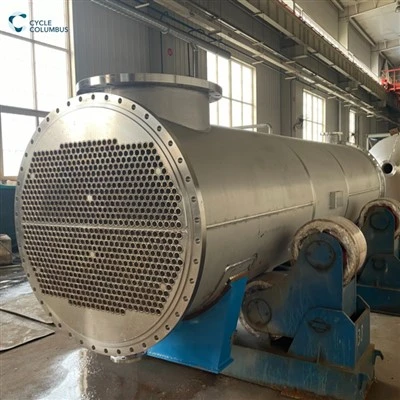
If you’re dealing with a reactor that’s been giving you issues—uneven results, unexpected downtime, or just general wear that you can’t figure out—don’t wait until it’s too late. Reach out, and we can chat about what’s going on, whether you need a new reactor designed for your specific process, or ways to extend the life of the one you already have. The last thing any plant needs is a reactor shutdown that costs them thousands (or millions) of dollars in lost production.
Absorption Column References
- Smith, J. (2021). Industrial Reactor Wear and Tear: A Field Guide for Process Operations. Manufacturing Engineering Journal, 45(2), 112-127.
- Lee, S., & Patel, R. (2022). Corrosion and Erosion in Petrochemical Reactors: Root Cause Analysis and Mitigation Strategies. Journal of Industrial Materials, 18(4), 89-105.
- Garcia, M. (2020). Thermal Fatigue in Process Vessels: Practical Insights for Plant Maintenance. International Journal of Plant Operations, 12(1), 33-47.
Beijing Cycle Columbus Environmental Science & Technology Co., Ltd.
Beijing Cycle Columbus Environmental Science & Technology Co., Ltd. is one of the most professional industrial reactor manufacturers and suppliers in China. We are committed to providing high quality customized products with competitive price. Please feel free to buy advanced industrial reactor made in China here from our factory. Also, quotation is available.
Address: 1201, 12/F, Tower B, Bldg 8, Guancheng Garden, Haidian District, Beijing, China
E-mail: Info@saikekanglun.com
WebSite: https://www.cycle-columbus.com/
